


Get hands-on with Tavistock’s heritage: free conservation sessions with DBR
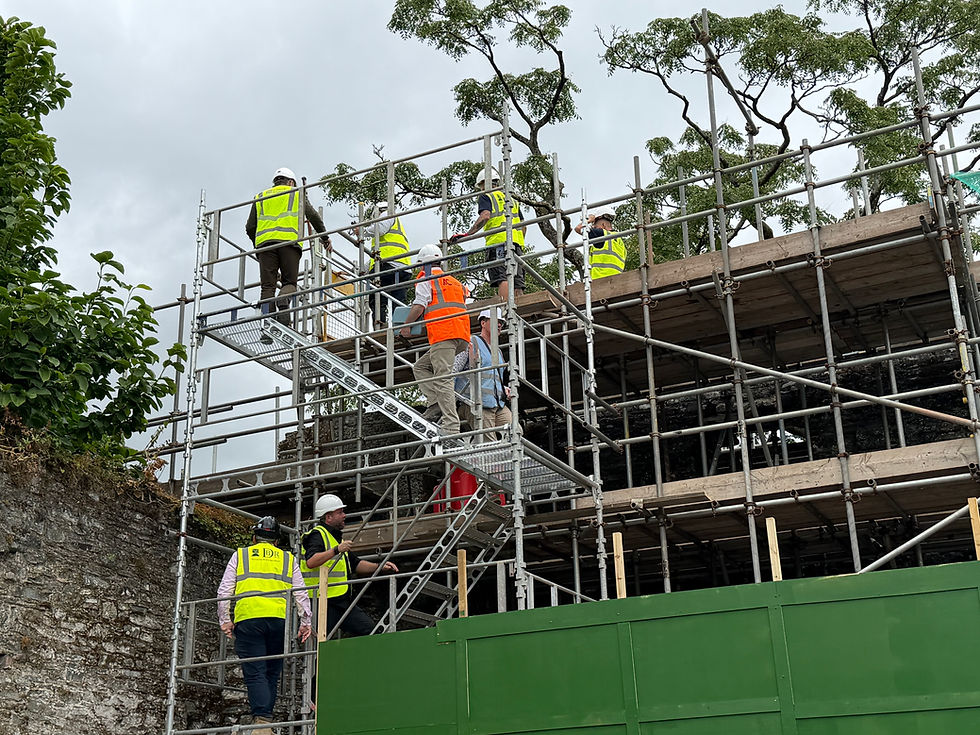
What does it take to care for an ancient stone wall? How do conservators decide what to repair, which materials to use and how to protect the surviving fabric?
This October, there is an opportunity to discover the skills behind the work at two of Tavistock’s historic abbey buildings.

Tavistock Heritage Trust is working with specialist conservation contractor DBR Limited to offer four free engagement and skills-learning sessions on Friday 16 and Saturday 17 October, as part of Rediscovering Tavistock Abbey.
With just 12 places per session, these small-group activities will bring participants closer to the conservation work at Betsy Grimbal’s Tower and the Still House.
DBR’s behind-the-scenes programme introduces the two buildings, their history and their place in Tavistock’s heritage. It also offers a chance to hear directly from the specialists carrying out the repairs, ask questions and discover the materials, methods and craftsmanship involved in conserving historic masonry.

The sessions will combine demonstrations with hands-on participation. Activities will include lime pointing, localised rubble masonry rebuilding, soft capping and tending lime mortar. Together, these offer an insight into the practical care that helps historic walls survive.
Pointing involves working on the mortar joints between stones, while localised rebuilding addresses sections of rubble masonry that need repair. Soft capping protects the tops of exposed walls. Tending lime mortar is part of caring for the repair after it has been applied. DBR’s team will explain the techniques and guide participation during the sessions.
For anyone curious about traditional building skills, this is a chance to see conservation at close quarters and understand the attention given to each stage of the work. It is also an opportunity to ask the people doing the job about the challenges and rewards of caring for historic buildings.
DBR specialises in heritage construction and conservation, combining traditional craftsmanship with modern conservation techniques. Sharing these skills with the community forms part of its work to keep historic buildings and the knowledge needed to care for them alive.
Two sessions will run on each day: a morning session from 10.30–11.30am and an afternoon session from 1–2pm. Please allow an additional 30 minutes in case activities overrun: until noon for the morning session or 2.30pm for the afternoon.


Comments